On this page8 sections
A clear place to start
The story moves from a spoofed call to secrecy, monitoring and a demand for money.
Hang up and verifyFind official contact details yourself instead of calling a number the caller supplies.
Act if you sent moneyContact your bank, keep the records and do not pay someone promising recovery.
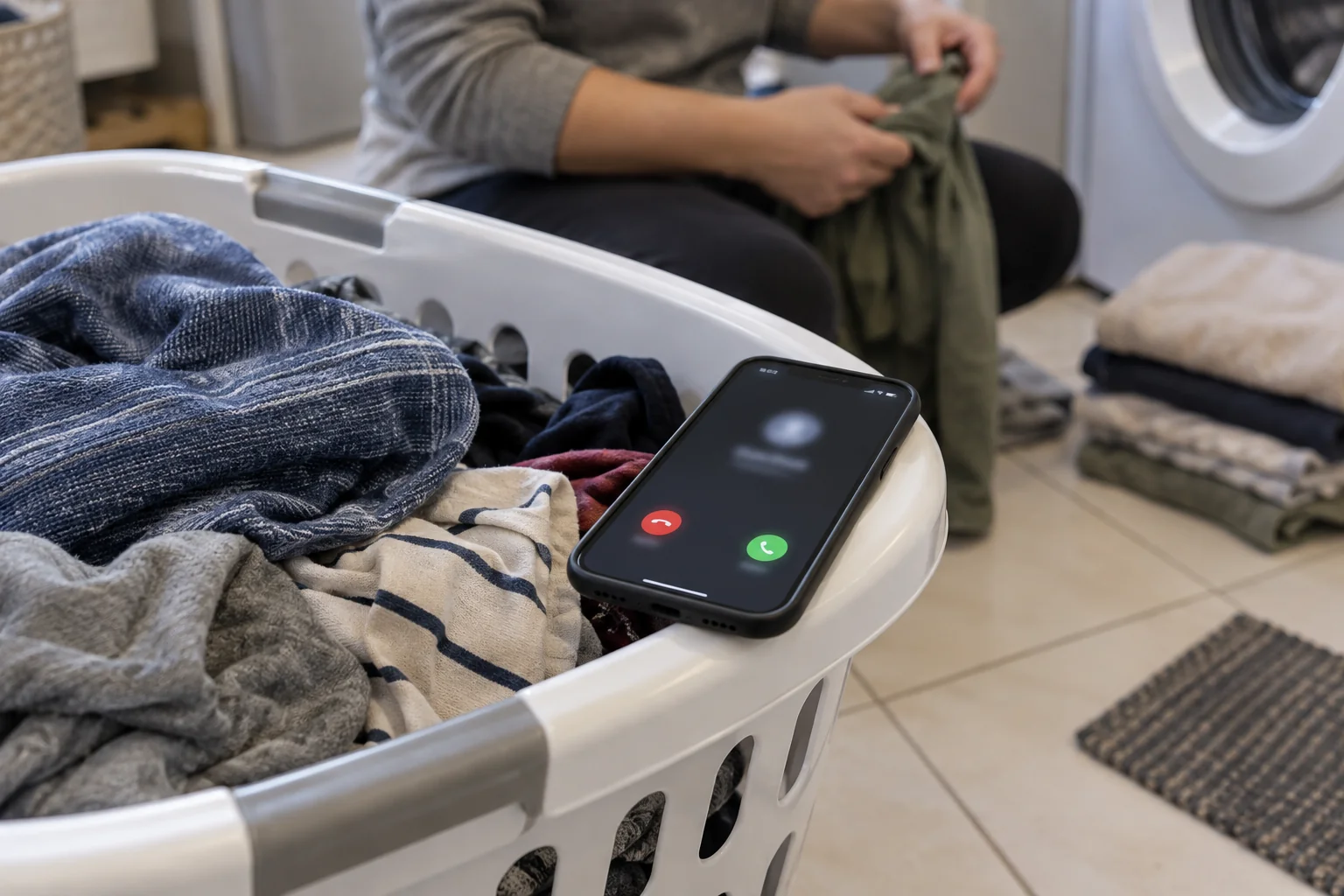
Suppose your phone rings at three o'clock this afternoon.
The caller ID shows a number starting with 212. You look it up, and it is exactly the same as the number published by the Chinese Consulate General in New York.
(This is a hypothetical scenario based on the tactics described by the FBI and Chinese embassies and consulates, not anyone's actual experience.)
The person on the other end speaks Mandarin and sounds very polite. 「Hello, this is the Consulate General. A package being sent to China has been detained. Several passports were found inside, and one of them is yours.」
You say you know nothing about it.
The caller says, no problem, I will transfer you to the police officer handling the case.
What comes next is not so polite.
What is different about this latest wave
In posts on Xiaohongshu about scam calls over the past six months, a few changes stand out.
First, the numbers look more and more real. Some people say the caller ID showed the number published by the Consulate General. Others say it was a local New York number, with the caller claiming to be NYPD.
Second, the caller has your real information. Your name and address roll right off their tongue. People in the comments say today's scammers no longer sound like customer service agents the way they used to. They keep calling back after you hang up, and their tone gets more aggressive.
Third, the schemes keep getting drawn out. Some people have been told to give a 「video statement」 and sign a 「confidentiality agreement」, then asked to download a messaging app and keep their camera on 24 hours a day, even having to report when they take a shower.
It sounds absurd, right? But during those few hours, people caught up in it really can believe it.
The FBI has already broken the scam down into four steps
In May 2024, the FBI Washington Field Office issued an alert specifically about this kind of scam targeting Chinese communities in the United States, breaking it down into four steps (the original FBI alert). Compare them with the call at the beginning.
Step one: a call comes from a spoofed number. The number appears to belong to a U.S. business or a Chinese embassy or consulate. The caller starts with something small, such as an overdue bill, an undeliverable package, or credit card debt.
Step two: the call is transferred to a 「Chinese police officer」, who presents a fake arrest warrant and says you are implicated in a case. They may also pressure you to return to China.
Step three: you are told to submit to 24-hour audio and video 「monitoring」. You are forbidden to tell anyone or look anything up online.
Step four: you are told to wire money to a bank account in China, supposedly to 「prove your innocence」 or pay 「bail」.
A year earlier, the FBI's Internet Crime Complaint Center, IC3, also issued an alert about the same kind of impersonation tactics.
You will notice that the most ruthless move in these four steps is not the intimidation. It is step three: do not tell anyone.
Because what this script fears most is one clearheaded person by your side.
Three things real authorities will not do
This September, the Chinese Consulate General in San Francisco issued a specific warning about scams impersonating Chinese embassies and consulates in the United States. Its wording was very direct (republished by Guangming Online).
Embassies and consulates are not law enforcement agencies. They will not call to tell you that you are suspected of breaking the law or committing a crime, and they will not transfer your call to law enforcement agencies in China.
Law enforcement agencies in China will not conduct investigations by phone, fax, or mobile messaging apps. They will not ask you, while abroad, to turn on video for 「security monitoring」, or ask you for 「bail」 or 「guarantee money」.
Scammers often alter caller ID. No matter how genuine a number looks, it is not proof.
Condense these points into three sentences and keep them in mind.
Chinese embassies and consulates will not call to tell you that you are implicated in a case, and law enforcement agencies in China will not conduct investigations over the phone. Real authorities will not tell you to keep it secret or keep your camera on to be monitored. They will not ask you to transfer money to prove your innocence.
If these things happen, you can generally conclude that it is a scam. For callers claiming to be U.S. police or government agencies, do the same: hang up first, look up the official number yourself, and call back to verify.
After hanging up, do these things
Every recommendation in that FBI alert is worth saving.
Do not disclose personal or financial information over the phone, do not transfer money, and stop contact immediately.
However official the number looks, look up the agency's public phone number yourself and call it yourself to verify. (The Consulate General's warning also says not to call back the incoming number.)
Do not agree to any form of 「monitoring」.
If someone claiming to represent the Chinese authorities comes to your door, contact your local FBI office.
Report it to IC3 (ic3.gov), including transfer records, the caller's number, and chat records.
If you are a student, also tell your school's security department.
If you feel someone is threatening your physical safety, call 911 directly.
If you want to ask the embassy or consulate itself, look up the consular protection number on the Consulate General's official website yourself and call it, or call the Ministry of Foreign Affairs' Global Emergency Hotline for Consular Protection and Services at +86-10-12308 or +86-10-65612308, available 24 hours a day.
What if you have already sent the money
Put self-blame aside for now. Time matters.
Call your bank immediately, using the number on the back of your card or on its official website, and explain that it was a scam. The FBI recommends contacting your bank immediately. The San Francisco Consulate General's warning says to contact both the sending and receiving banks to try to recover the money, and report it to the U.S. police where you live.
Keep all records: call logs, text messages, transfer receipts, and the software and accounts they told you to download or use. Then report it to IC3.
One more thing. If someone later claims they 「can help recover your losses」 and asks you to pay a fee first, they are a scammer too. The IC3 homepage itself carries a warning that people are impersonating IC3, and that IC3 will not contact you unsolicited to ask for information or money.
A new variation: the 「mistaken transfer」
Recently, people have also posted about another version. A stranger calls and says a family member accidentally transferred money to your account, begging you to send it back. You say you have not received it, but the caller will not let up and may even recite your home address to frighten you.
Whatever the caller says, do not transfer money to a stranger. If there really is money from an unknown source, open your bank or payment app yourself to check. If there is a problem, call official customer service and let the platform handle it. If you feel threatened, call 911.

Why smart people believe it too
Some people will say: who would fall for such an obvious scam?
Honestly, people who get trapped in this script for hours are not necessarily unintelligent.
In the early 1960s, Yale psychologist Milgram conducted a very famous experiment. With someone in a lab coat standing nearby saying 「Please continue」, many ordinary people kept pressing the button, even though they believed it would give another person an electric shock. Our obedience to authority runs deeper than we think.
What the scammers are playing is the person in that lab coat. Police officers, consulates, case numbers, arrest warrants: they are all props. Add 「confidentiality」 to separate you from the people around you, and the scammer's voice becomes the only one you hear.
So the solution is almost laughably simple.
Tell one person.
In one Xiaohongshu comment, a woman said she had encountered exactly the same scheme. She was terrified, and the caller warned her not to tell anyone. She called her mother immediately anyway. After her mother laughed heartily at her, she snapped out of it.
That may be the most useful sentence in this whole article.
Three sentences to save on your phone
I'll call back using the official number.
I don't give personal information over the phone.
I need to tell my family first.
There is no shame in receiving a call like this. Hanging up is a win.
When you finish reading this, you can share it with the older members of your family and friends who have just arrived in the United States.
Three things to do next
- If the caller brings up a case, secrecy and money, hang up and verify independently.
- If you sent money, contact your bank through official channels immediately and keep the records.
- Tell someone you trust so you are not making pressured decisions alone.
Verification dates and sources
The FBI and IC3 alerts were checked on October 19, 2026. The Chinese Consulate General in San Francisco's warning (republished by Guangming Online) and the IC3 homepage were checked on October 21. The opening of this article is a hypothetical scenario. The sections 「What is different about this latest wave」 and 「A new variation: the 'mistaken transfer'」, and the comment after 「Tell one person」, all come from public posts and comments on Xiaohongshu. They are reader accounts and have not been officially confirmed. No recent official NYPD statement about the version impersonating NYPD has been found so far.
View official sources
FBI Washington Field Office: FBI Washington Field Office Warns of Scam Targeting Chinese Communities in the U.S. (2024-05-09) (https://www.fbi.gov/contact-us/field-offices/washingtondc/news/fbi-washington-field-office-warns-of-scam-targeting-chinese-communities-in-the-us)
IC3: Public Service Announcement (2023-04-10) (https://www.ic3.gov/PSA/2023/PSA230410); ic3.gov complaint portal (https://www.ic3.gov/)
Warning from the Chinese Consulate General in San Francisco, republished by Guangming Online: Warning against telecommunications fraud by criminals impersonating staff of Chinese embassies and consulates in the United States (2026-09-01) (https://m.gmw.cn/2026-09/01/content_1304557179.htm)
A useful next step?
JOIN THE CONVERSATIONReader notes
Checking sign-in…
Loading reader notes…