On this page8 sections
A clear place to start
Imagine it is 11 at night, sometime in late October.
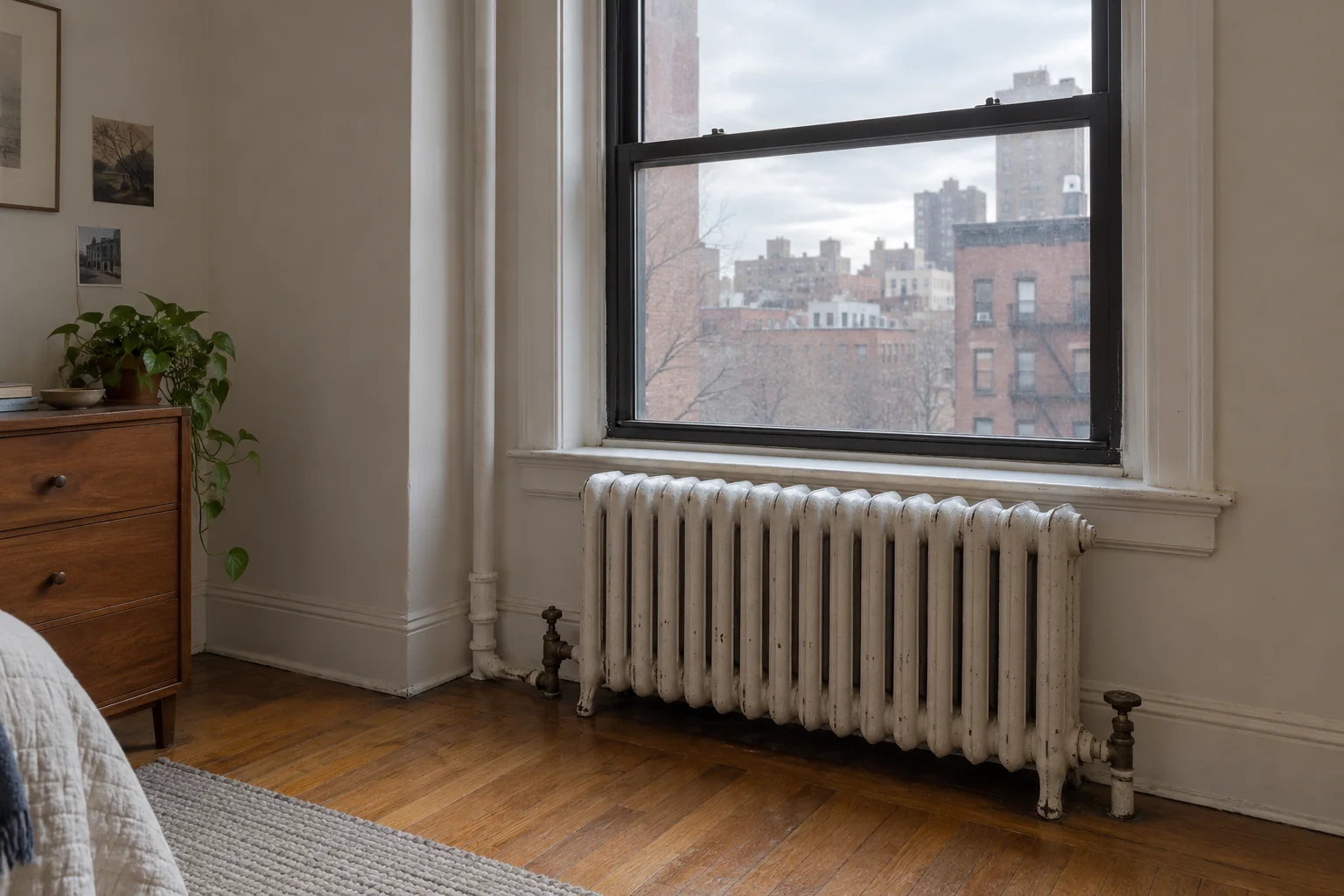
You're sitting on your bed in a down jacket, typing with fingers that are getting stiff. You touch the radiator. Ice cold.
You messaged the landlord three days ago. Read. No reply.
(This is a hypothetical situation, used to explain the steps.)
You're torn between two questions. Should you wait a little longer? And if you complain, will the landlord make you move out?
Under Xiaohongshu posts about heat, these two questions come up almost every time. Some people say they complained and the landlord told them to leave. Landlords also show up in the comments saying most landlords are reasonable: talk to them first.
I think the feelings on both sides are real. So this article isn't about how to argue with your landlord. It's about the order of things. Contact the landlord first and keep records. If that doesn't work, call 311. If that still doesn't work, the city and the courts have further steps.
Start with the rules
The New York City Department of Housing Preservation and Development (HPD) spells them out on its heat and hot water page.
Heating season runs from October 1 each year through May 31 of the following year.
During the day, from 6 a.m. to 10 p.m., the indoor temperature must be at least 68°F when it is below 55°F outside.
At night, from 10 p.m. to 6 a.m., the indoor temperature must be at least 62°F, whatever the temperature outside.
Hot water must be available 365 days a year, at a temperature of at least 120°F.
If you're used to Celsius, 68°F is about 20°C, and 62°F is about 17°C.
Posts about "new heating rules on October 1" have been widely shared on Xiaohongshu. Compare them with HPD's page, and the temperature standards and heating-season dates are the same as those above. They haven't changed. What is being pursued is something else. A July 16, 2026 press release from the Mayor's Office lists investigating every heat complaint individually, rather than combining complaints from the same building, as a measure to pursue. As of October 21, I hadn't found an HPD page confirming that it had taken effect.
Step one: contact the landlord, in writing
HPD itself says to contact your landlord first when you have no heat or hot water. It's the most straightforward way to resolve the problem.
The important part is to put it in writing. A text, WeChat message, or email will do. A conversation is hard to establish afterward. State which apartment, when the problem started, and the temperature you measured.
Hi, the heat in Apt 3B has not been working since Monday night. The bedroom was 57°F at 11pm. Could you send someone to fix it, and let me know when?
311's heat complaint guidance says to keep records of all contact with your landlord and HPD. Those records can later be used in Housing Court.
So once you've sent the message, take a screenshot.
Keep these things as you go
The following are this article's suggestions. The official pages don't require you to do these particular things, but they're useful when you need to show what happened.
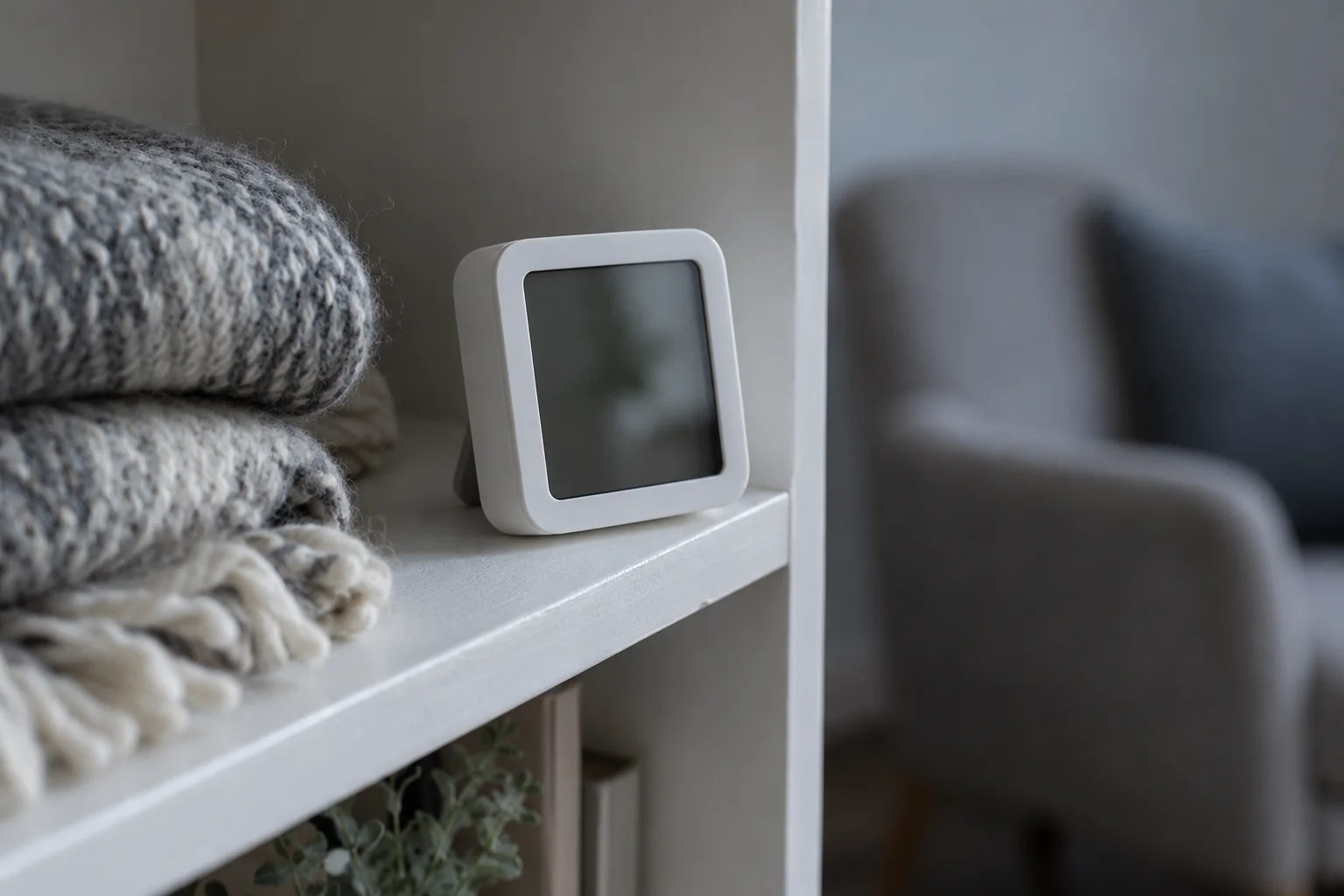
Buy an indoor thermometer for a few dollars and put it away from windows and radiators. Take a photo when it's cold, with the time visible too. Your phone will automatically record when the photo was taken.
Keep a simple log in your notes: date, time, indoor temperature, and whether there is hot water.
Save every message you send the landlord and every reply.
Save the service request number you receive after calling 311.
None of this is conspicuous, and none of it needs to upset anyone. It just means that when someone asks, "You said it was cold. How cold?" you don't have to answer from memory.
Step two: if the landlord doesn't respond, call 311
Call 311, or use the 311 website or mobile app, and say you want to report a heat or hot water problem. People with hearing impairments can use TTY (212) 504-4115. If your English is limited, listen to the English prompts first. Language options come up after about ten seconds: press 5 for Mandarin or 6 for Cantonese, following the prompts you actually hear.
There's a detail here that many people don't know. HPD's page says complaints can be anonymous, but with an anonymous complaint, an inspector picks an apartment in the building at random to take a reading. 311's guidance says you must leave contact information when reporting heat or hot water in your own apartment. If you want the inspector to come into your apartment to measure the temperature, leave your phone number.
After you call, it generally goes like this.
HPD first tries to contact the landlord or management company to tell them about the complaint and that they may receive a violation if they don't fix it promptly.
HPD may call you to ask whether the heat has come back. If you say it has been fixed, the complaint is closed.
If it hasn't been fixed, or HPD can't reach you, a uniformed inspector is sent. The landlord isn't told which day the inspection will take place. If English isn't your first language, tell the inspector; they can call an interpreter.
If the indoor temperature is below the standard, a violation is issued.
Keep that service request number. You'll need it to follow up.
Still no repair? The city and the courts have further steps
Many people don't realize that a violation isn't the end of the process.
HPD's page says that if a landlord still hasn't restored heat and hot water after receiving a violation, the city's Emergency Repair Program can hire a private company to do the work and bill the landlord. If the indoor temperature at the time is below 64°F during the day or 58°F at night, additional related fees apply.
The landlord may also face penalties. A first heat or hot water violation carries a penalty of $250 to $500 per day. A repeat violation in the same building in the same year or the next year carries $500 to $1,000 per day. During the same heating season, each additional inspection finding a heat violation after the first two also incurs a $200 fee. The city collects these amounts from the landlord; they aren't compensation paid to the tenant.
Tenants can also take a step themselves. New York City Housing Court has a type of case called an HP case, in which a tenant sues the landlord to require repairs. The court's emergency repairs guidance says to tell the clerk that it's urgent when you file over an emergency such as no heat. If the judge determines it is an emergency, a hearing is scheduled in about a week, and the judge can order the landlord to make repairs.
Before getting to that point, I suggest calling 311 and asking for the Tenant Helpline. According to the city's information page, the helpline is free, does not ask about immigration status, and offers multiple languages. It can explain tenant rights and refer you to free legal services.
The question that worries people most: can a complaint get you pushed out?
It's a very understandable worry. When you've just arrived in New York, finding a place isn't easy. Nobody wants to move in the middle of winter.
New York State law addresses this. Real Property Law §223-b says a landlord cannot retaliate against a tenant for making a good-faith complaint to the landlord or a government agency about repairs, health, or safety. Retaliation can include evicting you, bringing a case to recover the apartment, refusing to renew the lease, or unreasonably increasing the rent on renewal. If a landlord takes these actions within one year of a complaint, the law presumes retaliation, and the landlord must show otherwise.
But two points need to be clear. First, this protection doesn't cover owner-occupied buildings with fewer than four units. A two- or three-unit building where the landlord lives upstairs and the tenant lives downstairs may fall into that category. Second, you still have to pay the rent.
If you're sharing a place through a primary tenant, or renting in a small building where the landlord lives, things can be much more complicated. Don't guess. Call 311 and ask for the Tenant Helpline, or ask a free legal service which situation applies to you.
Before signing, check the building
If you haven't moved in yet, there's something you can do in advance. HPD has HPD Online, where you can search a building's complaints and violations by address. Enter the address before you sign. If heat and hot water complaints keep appearing throughout the year, that tells you something.
One last thing
New York's winter is long, from October through May of the following year.
Being cold isn't something you should have to put up with. But you don't have to start with an argument either. A written message, a thermometer photo with the time, and a 311 number. Most of the time, the issue is resolved at the first step. On the occasions when it isn't, those three things can stay with you through the whole process.
Here's one thing you can do tonight. Save this sentence in your notes.
The heat in my apartment is not working. I would like to file a heat complaint for my apartment.
Three things to do next
- Send the landlord a specific written message about the heating problem and keep it.
- Record temperatures and contact attempts; keep photos, replies and reference numbers together.
- If it remains unresolved, follow up and ask a tenant helpline or lawyer about the next step.
Date checked and sources
The following pages were checked on October 21, 2026. The opening situation is hypothetical. The steps under "Keep these things as you go" are this article's suggestions, not official requirements. This article brings together general information and is not legal advice. For your particular situation, consult the Tenant Helpline or a licensed attorney.
View official sources
HPD: Heat and Hot Water Information (https://www.nyc.gov/site/hpd/services-and-information/heat-and-hot-water-information.page); HPD Online (https://www.nyc.gov/site/hpd/about/hpd-online.page)
NYC311: Heat and hot water complaint guidance (https://portal.311.nyc.gov/article/?kanumber=KA-01036)
New York City Mayor's Office: July 16, 2026 press release (https://nyc.gov/mayors-office/news/2026/07/mayor-mamdani-releases--rental-ripoff-report---outlining-new-act)
Mayor's Public Engagement Unit: Tenant Helpline (https://www.nyc.gov/site/mayorspeu/resources/tenant-helpline.page)
New York State Unified Court System: Emergency Access and Repairs (https://www.nycourts.gov/new-york-city-housing-court/emergency-access-and-repairs)
New York State law: Real Property Law §223-b (https://www.nysenate.gov/legislation/laws/RPP/223-B)
NYC311: Language services (press 5 for Mandarin or 6 for Cantonese) (https://portal.311.nyc.gov/article/?kanumber=KA-03549); About 311 (TTY number) (https://www.nyc.gov/311/about-311.page)
A useful next step?
JOIN THE CONVERSATIONReader notes
Checking sign-in…
Loading reader notes…