On this page9 sections
A clear place to start
Establish whether the broker represents the landlord or is someone you chose to hire.
Get an itemized listBefore signing, ask for a written breakdown of every charge.
Verify after the viewing, tooCheck whom you are dealing with, and do not send money before you understand the situation.
Read This First if You're Short on Time
A broker hired by the landlord, including the one advertising the apartment, cannot charge you a broker fee. You may have to pay only a broker you hire yourself.
At the application stage, the background and credit check fee is capped at $20. A report from within the past 30 days can be used to have that fee waived.
If you haven't seen the apartment, don't pay anything yet.
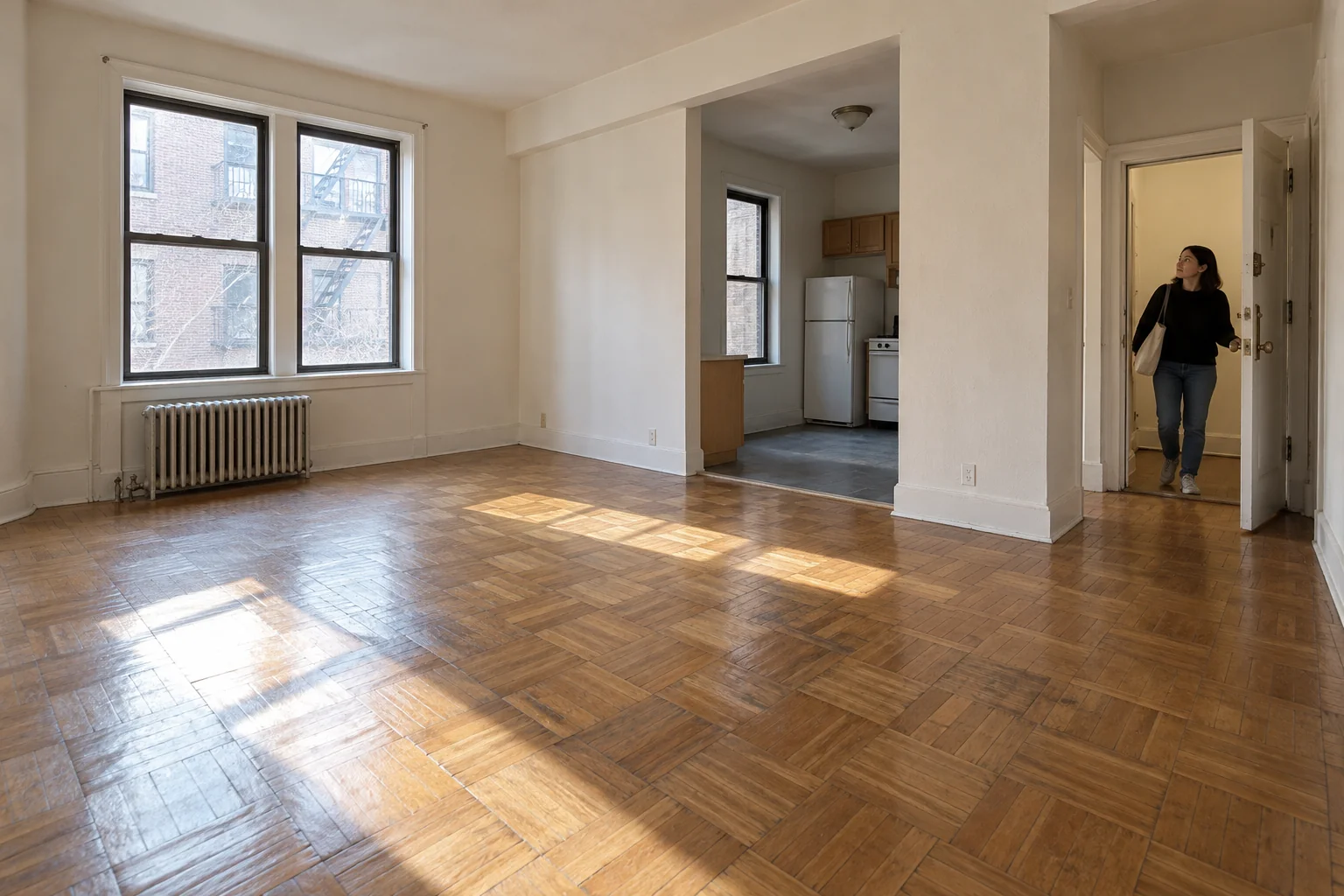
Imagine Xiao Chen is looking for an apartment.
(Xiao Chen is fictional, and the conversations below are hypothetical.)
She finds a one-bedroom online that she likes. The listing photo has “No Fee” written across it in big letters. She sends a message, and the broker replies quickly.
“That one just rented. But I have several similar places. Sign our service agreement first. The fee is one month's rent if you rent a place, and I'll take you to see them tomorrow. Oh, and the application fee is $100. Send that to me first.”
Xiao Chen stares at her phone with one question in her head: wasn't there supposed to be no broker fee?
What People Are Asking in the Comments
Over the past six months, nearly every New York rental listing photo in posts on Xiaohongshu seems to say “no broker fee” or “No Fee.” At the same time, there are still posts explaining “how to negotiate a broker fee down by half.” The question that keeps coming up in the comments is really the same one: which charges am I actually supposed to pay now?
These are the posters' own accounts, and this article isn't judging any individual post. But the underlying question can be explained.
Remember This: Whoever Hires the Broker Pays
New York City's FARE Act took effect on June 11, 2025. The Department of Consumer and Worker Protection (DCWP), which enforces it, puts the rules plainly on its FAQ page.
A landlord's agent, including the broker who posts the listing, cannot charge the tenant a broker fee.
No one can make hiring a broker first, including a broker representing both sides, a condition of viewing or renting an apartment.
The law doesn't stop you from choosing to hire a broker and paying them yourself. But even a broker you hire cannot make hiring them a condition of showing you particular apartments.
Think of going out to eat: whoever orders the food pays the bill. If the landlord hires a broker to find a tenant, the landlord should pay. If you hire a broker to help you find a place, that's when paying the broker falls to you.
So you can ask this in your very first conversation.
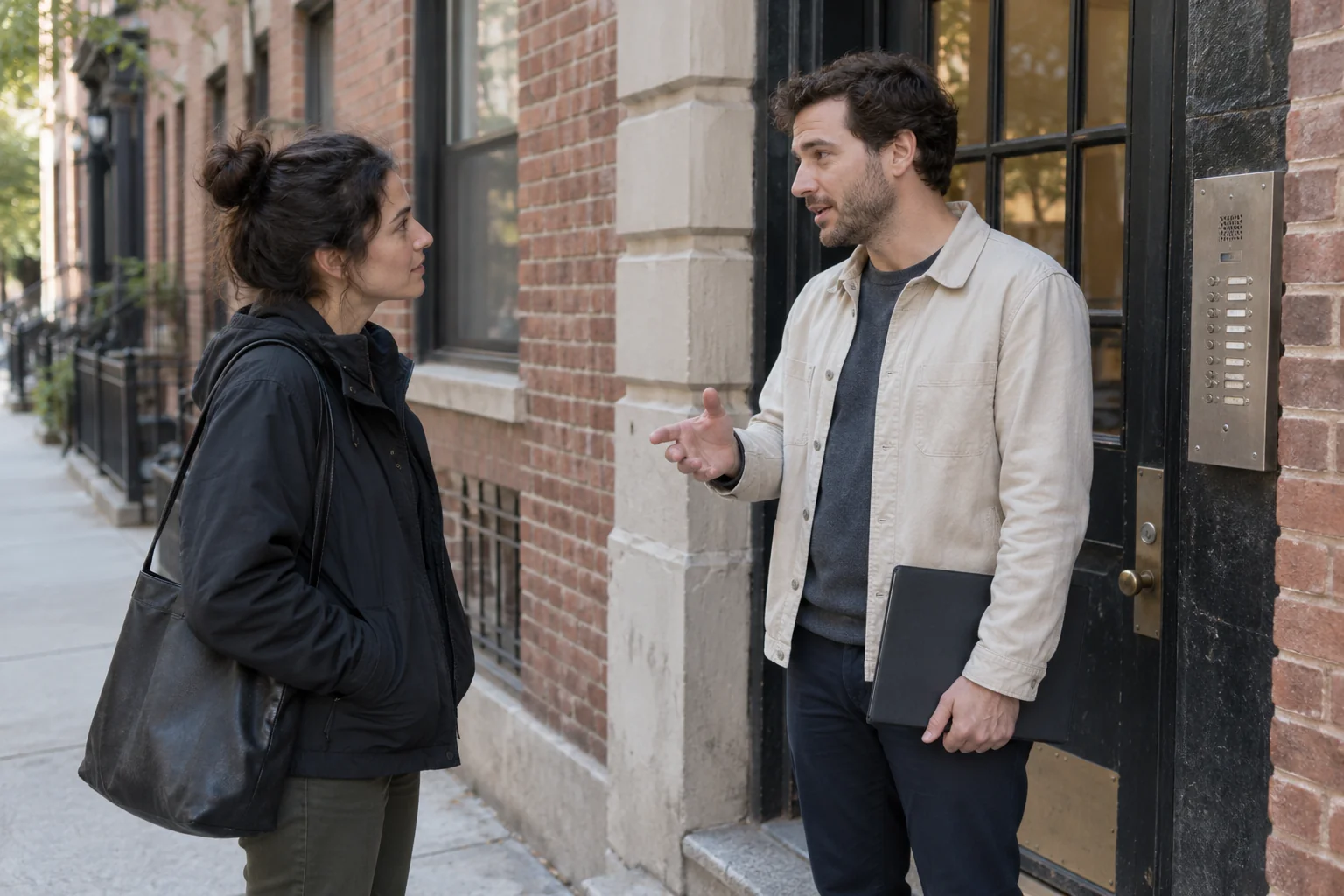
Are you working for the landlord on this listing, or would you be working for me?
For this apartment, are you representing the landlord or representing me?
Back to the message Xiao Chen received. For the apartment listed as “No Fee,” the broker was finding a tenant for the landlord. Saying “sign the agreement first, pay one month's rent if you rent, and only then will I show you those apartments” sounds very much like a practice singled out in a city report from July this year. We'll get to that in section 3. The third point above also makes clear that even a broker hired by a tenant cannot make viewing particular apartments conditional on hiring them.
“No Fee” Doesn't Mean You Pay Nothing
No broker fee doesn't mean you won't have to pay a cent when you sign. These are some common charges the law permits.
Background and credit check fee. Under New York State law, Real Property Law §238-a, this is the only charge allowed at the application stage, and it must be the actual cost or $20, whichever is lower. If you provide a background or credit check completed within the past 30 days, the landlord must waive this fee. The landlord must also give you a copy of the results and a receipt from the screening company. Without those, they cannot charge the fee.
Security deposit. New York State law limits the security deposit for most rentals to one month's rent, under General Obligations Law §7-108.
The first month's rent.
So the “$100 application fee, send it to me first” that Xiao Chen heard is already over that limit.
The FARE Act also requires listings to disclose all charges the tenant will have to pay, clearly and conspicuously. Before you sign the lease, the landlord or their agent must give you a written itemized disclosure of the charges. You sign it, they keep it for three years, and they give you a copy.
This is worth asking before you sign anything.
Before I sign, could you send me an itemized list of every fee I'll pay?
Could you list every charge I'll have to pay, one by one, before I sign the lease?
If they say there's a credit check fee, add this.
Is this fee for the background and credit check? Could I get a copy of the report and the receipt?
Is that charge for the background and credit check? Can you give me the results and a receipt?

“That One Just Rented, but I Have a Few Others”
The opening Xiao Chen heard isn't unusual.
The city held “rental ripoff” hearings across the boroughs from February through April this year and published a report in July. Summarizing tenants' testimony, the report describes brokers advertising apartments they never intend to show, or apartments that are no longer available. Once someone responds, the broker demands a payment before agreeing to show the apartments that actually are available. The report identifies this practice as a violation of the FARE Act.
If this happens, don't rush to send money or sign anything. You can check the person's license first. New York State real estate brokers and salespersons can be looked up in the Department of State's eAccessNY system. Choose Public License Search. You can search by name or license number.
Could you share your New York real estate license number?
Would you mind giving me your New York real estate license number?
Haven't Seen the Apartment? Don't Pay Yet
This is separate from broker fees, but it's just as common.
The Federal Trade Commission's (FTC) rental-scam guidance describes several familiar patterns: someone asks for an application fee, security deposit or first month's rent before you've seen the apartment; the landlord says they're overseas and can't meet; the rent is much lower than comparable places nearby; or a scammer copies photos from a real listing and presents them as their own. Its main advice is to see the apartment before signing or paying, if you can. But it also warns that seeing a place doesn't guarantee you're safe. Some scammers copy a real landlord's listing and arrange a “self-guided tour” to make the scam seem legitimate. So you also need to check whether the person really is the landlord or broker, for example by checking their ID against ownership or management-company records. In the FTC's view, paying by wire transfer, gift card or cryptocurrency is like handing over cash: it's hard to get back.
In a 2022 warning about summer rental scams, the New York State Attorney General's Office also advised against paying through wire-transfer-type services, specifically naming Zelle, Cash App and Venmo.
If It Happens to You, Whom Can You Contact?
If you think you were charged a broker fee you shouldn't have had to pay, you can call 311 and say “Broker Fees,” or file a complaint online at nyc.gov/consumers. Attach screenshots of the listing, messages and payment records. DCWP has a FARE Act guide in 11 languages, including Simplified Chinese. According to its FAQ page, the law also allows tenants to bring their own case in civil court.
Enforcement is happening, too. The July report mentioned above says that, as of July 2026, DCWP had issued at least 79 summonses under the FARE Act, imposed a total of $36,125 in fines on violators, and recovered $15,475 for residents who had been forced to pay broker fees.
You may also be wondering: wasn't this law challenged in court? Yes. Before it took effect, real estate industry groups sued the city. On July 13 this year, the U.S. Court of Appeals for the Second Circuit upheld the district court's decision not to pause the law, so it remains in effect. The district court had not dismissed the part of the case concerning the Contracts Clause. This round of checking did not establish how that part proceeded afterward or whether there have been further developments.
The New York City Department of Housing Preservation and Development (HPD) also has a Simplified Chinese version of its Tenant Bill of Rights, which covers rules on application fees and security deposits.
Two “Buts”
“But the broker says he won't show me anything unless I sign his agreement, and I need somewhere to live soon.”
That urgency is real. But “you can't view or rent unless you pay a particular broker” is exactly what the FAQ page says is prohibited. You can ask the broker to put in writing whom they represent, what they want to charge and why. Keep screenshots of the listing and all the messages. Whether to keep talking is your decision. Just don't send money before you understand what's going on.
“But I actually want to hire a broker to help me look. Is that not allowed either?”
It is allowed. The law doesn't prohibit hiring a broker yourself and paying them. Before you hire one, though, ask for a written agreement covering how much they charge, when payment is due and what happens if they don't find you a place.
Could you put the fee and when it's due in writing before we start?
Before we begin, could you write down the charge and when I would need to pay it?
Before You Go
“No Fee” stands out on a listing. But what actually determines whether you have to pay is this: who hired the broker?
Get an answer to that question, ask for an itemized list of charges, and don't send money before you've seen the apartment. Do those three things, and most confusing charges can be spotted before you pay.
What charges have you been asked to pay while apartment hunting recently? Feel free to share in the comments. Please leave out the other person's name and phone number.
Three things to do next
- Ask whom the broker represents before deciding whether to proceed.
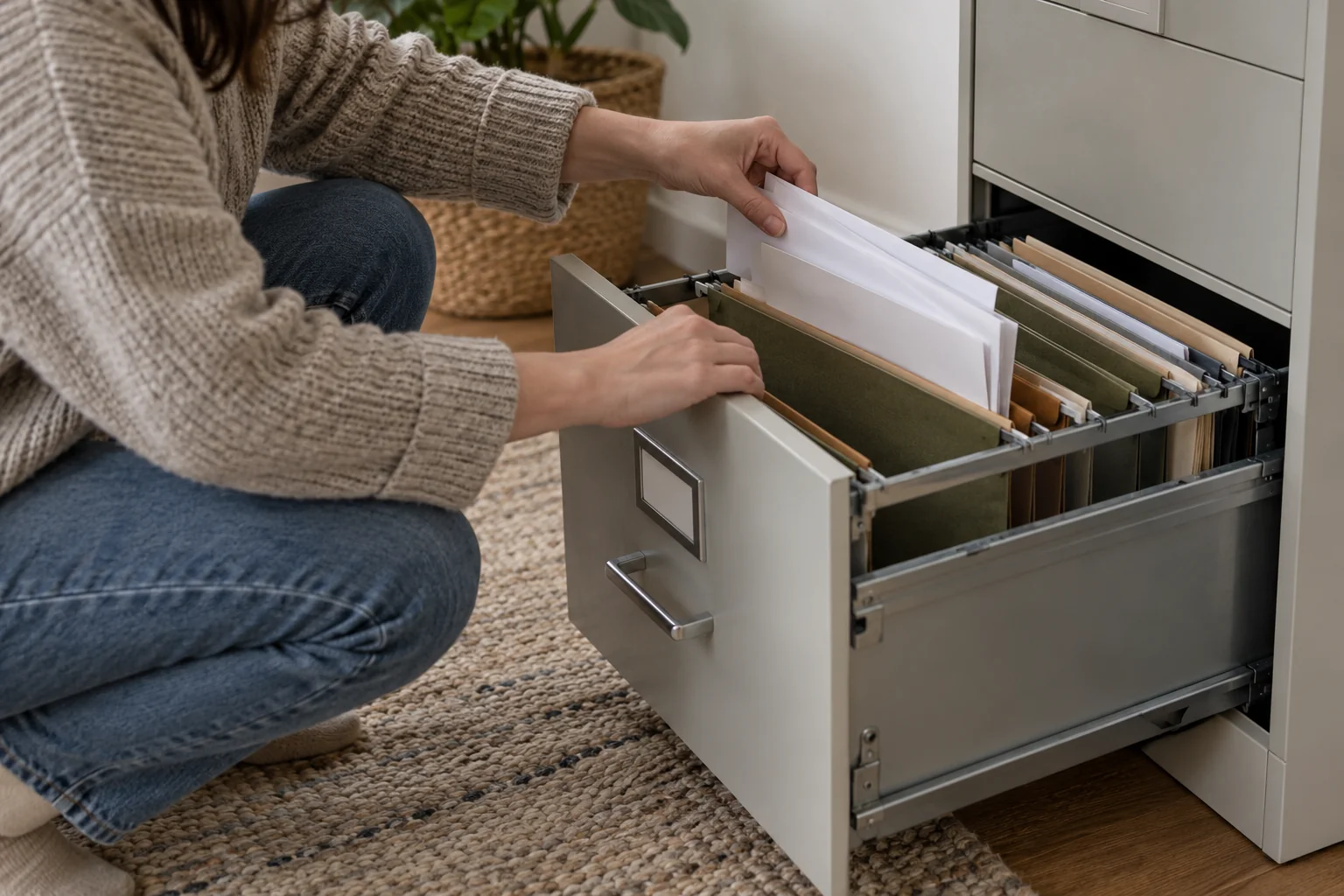
- Before signing, request an itemized fee list and written charges and payment dates.
- Do not pay before seeing the apartment; keep listing screenshots, messages and payment records.
Verification Date and Sources
The pages below were checked on October 23, 2026. Xiao Chen and the conversations in this article are hypothetical. The situations discussed in “the comments” come from public Xiaohongshu posts and are readers' accounts. This article provides general information, not legal advice. For your specific circumstances, consult a lawyer or tenant organization. There are a few exceptions to the security-deposit rules; refer to the law itself and official guidance.
View official sources
New York City Department of Consumer and Worker Protection (DCWP): Broker Fees FAQ (page marked updated 2026-06-02) (https://www.nyc.gov/site/dca/about/FAQ-Broker-Fees.page); FARE Act guide in 11 languages (September 2025) (https://www.nyc.gov/assets/dca/downloads/pdf/about/FARE-Act-Brochure-11-Languages.pdf)
New York City government: Rental Ripoff Hearings report (July 2026) (https://www.nyc.gov/assets/tenantprotection/downloads/pdf/rental-ripoffs-hearing-report-072026.pdf)
New York City Department of Housing Preservation and Development (HPD): Tenant Bill of Rights, Simplified Chinese (https://www.nyc.gov/assets/hpd/downloads/pdfs/services/tenant-bill-of-rights-simplified-chinese.pdf)
New York State law: Real Property Law §238-a (https://www.nysenate.gov/legislation/laws/RPP/238-A); General Obligations Law §7-108 (https://www.nysenate.gov/legislation/laws/GOB/7-108)
New York State Department of State: eAccessNY license search (https://appext20.dos.ny.gov/nydos/selSearchType.do)
U.S. Court of Appeals for the Second Circuit: Decision in No. 25-1506 (2026-07-13) (https://ww3.ca2.uscourts.gov/decisions/OPN/25-1506_opn.pdf)
Federal Trade Commission (FTC): Rental Listing Scams (https://consumer.ftc.gov/articles/rental-listing-scams)
New York State Attorney General's Office: Summer rental scam warning (2022-05-20) (https://ag.ny.gov/press-release/2022/consumer-alert-attorney-general-james-warns-new-yorkers-summer-rental-scams)
A useful next step?
JOIN THE CONVERSATIONReader notes
Checking sign-in…
Loading reader notes…