
On this page10 sections
A clear place to start
Rent-stabilized, rent-controlled and market-rate homes follow different rules.
Check the lease and rent historyReview lease riders, building records and the HCR rent history together.
Review the renewal detailsCheck when the new lease starts and distinguish annual increases from other charges.
In a hurry? Start here
For rent-stabilized leases starting between October 1, 2026 and September 30, 2027, the annual increase limit is 0% for both one-year and two-year terms, including renewals. Major Capital Improvements, or MCI, and similar increases are separate. Landlords have sued over the freeze. The judge has not stopped it, and no decision had been issued as of the end of October.
It applies only to rent-stabilized apartments. This rule does not cover market-rate apartments.
If you are unsure whether your apartment is rent stabilized, first check the lease and its attachments. Then request a rent history from the state's Homes and Community Renewal agency, HCR, at 1-833-499-0343.
Suppose Mr. He has rented a two-bedroom in Brooklyn for six years.
(Mr. He is fictional, and the scenes below are hypothetical.)
His lease expires at the end of February 2027. In early November, the landlord sends a renewal offer. The new lease starts March 1, with a 3% rent increase.
A downstairs neighbor tells him, 「Didn't the news say rents were frozen? You shouldn't have an increase.」 Mr. He looks at the renewal offer and does not know whom to believe.
What people are asking in the comments
Over the past few months, several Xiaohongshu posts have discussed New York's rent freeze. Others have warned people not to celebrate too soon, because it does not cover every apartment. Posts about tenants aged 62 or older applying to freeze their rent have also been shared and saved a lot. There are not many comments under these posts, but they all come back to the same question: is the apartment you live in actually rent stabilized?
These are the posters' accounts of their own experiences. Below, we will go through the official explanations from the New York City Rent Guidelines Board, RGB, the state's Homes and Community Renewal agency, HCR, and the city government, one thing at a time.
What exactly is frozen?
Every year, the New York City Rent Guidelines Board sets the rent-increase limit for rent-stabilized apartments. On June 25, 2026, it adopted Order No. 58. For leases starting between October 1, 2026 and September 30, 2027, the increase is 0% for a one-year term and 0% for a two-year term. The mayor's statement says this is the first time even two-year leases have been frozen. Hotels and single-room occupancy units, or SROs, have a separate order, also set at 0%: Hotel Order No. 56.
For comparison, the previous year's limits, for leases starting between October 2025 and September 2026, were 3% for one year and 4.5% for two years, according to the city's rent-increase guide.
The key is the date your lease begins. Mr. He's renewal starts on March 1, 2027, within this period. If his apartment is rent stabilized, the rent should not increase with this renewal. By contrast, if a renewal started in September 2026, it would still use the previous year's limit: 3% for a one-year lease.
There are three other things to know. First, there are lawful ways to increase rent outside the annual guideline, such as Major Capital Improvements, MCI, and Individual Apartment Improvements, IAI, mentioned in RGB's FAQ. Second, Order No. 58 includes a special provision covering only formerly rent-controlled units that become vacant after September 30, 2026. It is mainly used when a new tenant challenges the first rent-stabilized rent. It is unrelated to an ordinary rent-stabilized renewal.
Third, the freeze is being challenged in court. In July this year, several small landlords sued in state court to overturn it and require RGB to vote again. The judge did not stop it, so the freeze took effect as scheduled on October 1. The judge said a decision would come before year-end, but reports through the end of October said none had yet been issued: Brick Underground on October 1 and CRE Daily on October 29. If things change, follow announcements from RGB and the city government.
Which apartments are rent stabilized?
This freeze covers only rent-stabilized apartments. RGB's FAQ says landlords of unregulated apartments can set rents according to the market, although the Good Cause Eviction law may limit increases, as discussed under 「Two buts」 below. The city's 311 guidance also says RGB does not govern unregulated apartments or subsidized housing. Rent-controlled apartments have a separate set of rules and are not covered by RGB's annual decision either.
So which apartments are rent stabilized? HCR's explanation says they are mainly in buildings constructed before 1974 with 6 or more units. Buildings constructed between February 1, 1947 and December 31, 1973 are covered. In older buildings built before February 1, 1947, tenants who moved in after June 30, 1971 are generally covered too. Buildings built after 1974 that received certain tax benefits are generally covered during the benefit period. The 311 explanation also says co-ops and condos generally do not qualify. However, HCR also says tenants who lived in a building before it converted to a cooperative under a non-eviction plan, and who did not buy their units, remain subject to rent control.
There are about 1 million rent-stabilized apartments citywide.
Three steps to find out whether yours qualifies
First, check the lease and its attachments. The city's rent-increase guide says to look for any mention of rent stabilization. HCR requires both new and renewal leases for rent-stabilized apartments to include a Rent Stabilization Lease Rider for Apartment House Tenants, RA-LR1. If you have that rider, it is a strong indication that the apartment is rent stabilized.
Second, look at the building's notices. A new city law, Local Law 86, requires buildings containing rent-stabilized units to display a notice in English and Spanish in a common area starting January 26, 2026. It begins, 「This building contains one or more units that are subject to the Rent Stabilization Law of 1969,」 according to the city's Department of Housing Preservation and Development press release. But it says the building has one or more rent-stabilized units. It does not mean your particular apartment necessarily is one.
Third, request the rent history from HCR. This is the most reliable approach. The city's explanation says you can call 1-833-499-0343 and choose the rent-history option in the recorded menu. You can also use HCR's online portal at portal.hcr.ny.gov/app/ask, select 「Apartment rent history」 as the reason, and provide the full address, including apartment number and ZIP code. For in-person questions, you can visit an HCR borough rent office. However, both 311's explanation and HCR's service guidance say appointments are required, and HCR says rent histories should generally still be requested online. If your apartment has never been rent stabilized, nothing will be mailed to you. HCR's translation guidance says you can request an interpreter on this telephone line during business hours.
I'd like to request the rent history for my apartment. Could I have a Mandarin interpreter, please?
I would like to request my apartment's rent history. Could you connect me with a Mandarin interpreter?
HCR also has a rent-stabilized building search, which you can use to see whether your building is listed. But HCR itself says being listed does not establish the building's current status, and the list may not be complete. So being absent does not necessarily mean it is not rent stabilized. The rent history remains the final reference.
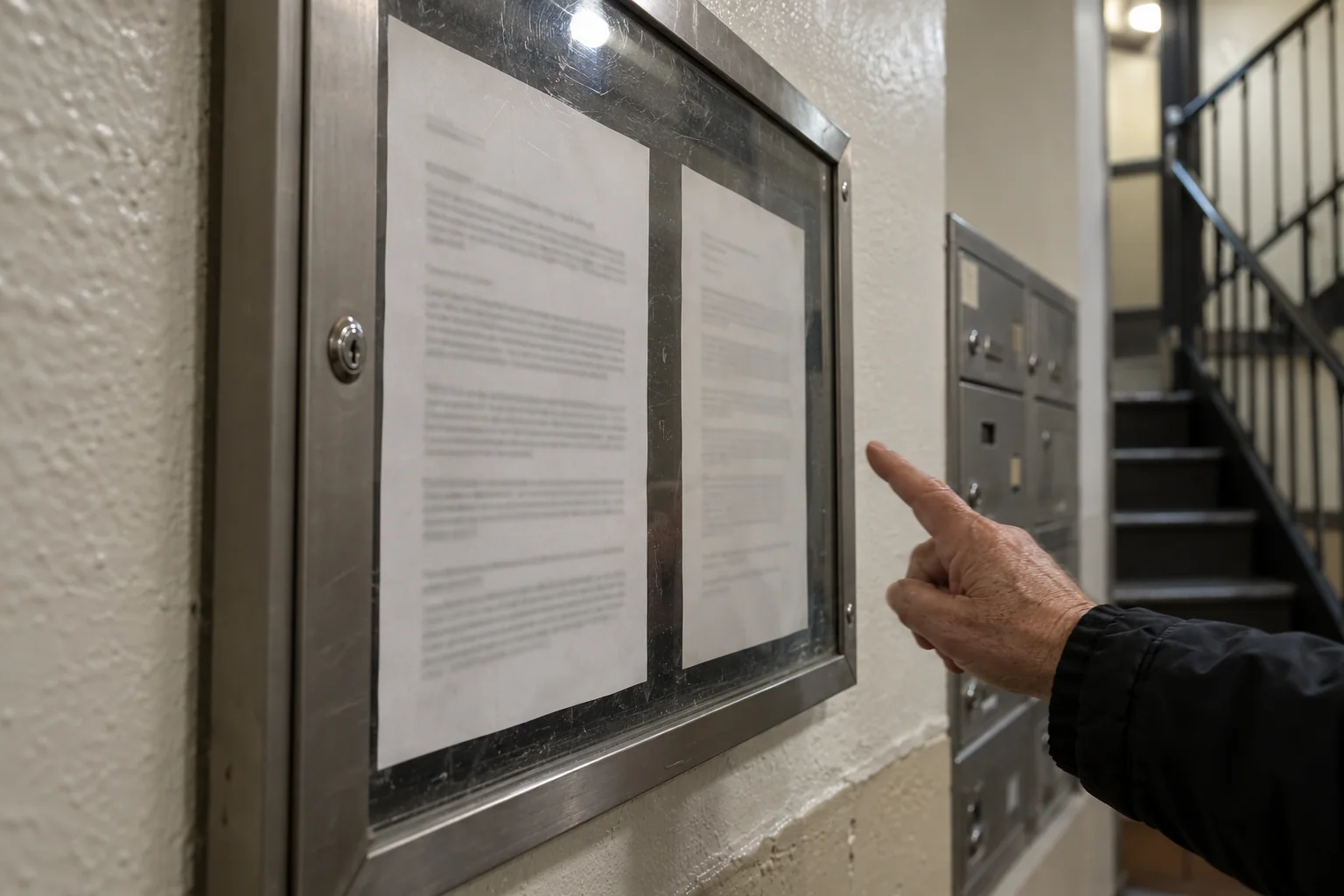
What to watch when renewing
HCR's Fact Sheet No. 4 is clear about the following.
In New York City, the landlord must notify you with a written renewal offer between 90 and 150 days before your current lease expires.
After the landlord sends the renewal offer, you have 60 days to choose the term, sign and return it. It is best to respond early.
You choose whether to renew for one year or two.
The renewal must keep the terms of the original lease.
Many rent-stabilized tenants pay a 「preferential rent」 that is lower than the registered rent. HCR's Fact Sheet No. 40 says that following the 2019 change in state law, landlords cannot withdraw preferential rent at renewal. Increases must be calculated using the preferential rent. Only when the tenant permanently moves out can the landlord charge the higher registered rent. This year's limit is 0%, so calculating it from preferential rent still means no increase.
Back to Mr. He. If he confirms that his apartment is rent stabilized, he can say this to the landlord.
My apartment is rent stabilized, and my renewal lease starts on March 1, 2027. The guideline for this period is 0%. Could you please correct the renewal offer?
My apartment is rent stabilized, and the renewal begins on March 1, 2027. The guideline limit for this period is 0%. Please correct the renewal offer.
While discussing this with the landlord, keep an eye on the 60-day deadline. Mr. He received the offer in early November, so his deadline would fall around early January next year. Fact Sheet No. 4 says that if you do not respond within 60 days, the landlord may refuse to renew and may take you to court. If the landlord will not correct the offer, call 311 for the Tenant Helpline to ask what to do, or file an overcharge complaint with HCR.
If you are overcharged, whom can you contact?
Rent-stabilized tenants who believe they have been overcharged can file an overcharge complaint with HCR using form RA-89, according to HCR's guidance. Fact Sheet No. 16 says you can recover overcharges from up to 6 years before the complaint. If an overcharge is found to be willful, the penalty is three times the overcharged amount. Order No. 58 also says overcharged amounts must be credited in full against the following month's rent.
For help, call 311 and say 「Tenant Helpline」. Its hours are Monday through Friday, 9:30 a.m. to 5 p.m., according to the city's tenant-support page. If you are taken to Housing Court and face eviction, the city has free legal representation or legal advice through Right to Counsel, available in every ZIP code citywide regardless of immigration status, according to the city's Human Resources Administration.
If you are a tenant aged 62 or older, look into another program
The 「senior rent freeze」 mentioned on Xiaohongshu is another city program, the Rent Freeze Program. The part for older tenants is called SCRIE. According to ACCESS NYC, you must meet all of these conditions: be aged 62 or older; live in the apartment yourself and have your name on the lease; have total household annual income at or below the limit; pay rent exceeding one-third of your monthly income; and live in a rent-stabilized apartment, a rent-controlled apartment, a regulated hotel or SRO, or certain government-assisted housing.
The income limit is changing. ACCESS NYC and the city's Rent Freeze page still show $50,000. This year, the state authorized raising it to $75,000, effective July 1, 2026. In late October, the City Council passed the corresponding bill, Intro 978-B. Reports as of October 24 said it was still awaiting the mayor's signature, according to Council Member Farah Louis's proposal explanation and Finger Lakes 1 reporting. If your household's annual income is between $50,000 and $75,000, call 311 and ask about SCRIE to find out whether you can apply now.
If you qualify, your rent can be frozen at a set amount, with future increases covered through a city tax credit to the landlord. You can apply online, mail an application, or visit a Department of Finance service center. Call 311 and ask about SCRIE, or call 929-252-7242 for one-on-one help with the application. The page has a Traditional Chinese version, but it is updated more slowly than the English version. A similar program for people with disabilities is called DRIE.

Two 「buts」
「But I live in a market-rate apartment. Does the freeze have nothing to do with me?」
The freeze order does not cover you. For an unregulated apartment, rent is generally negotiated between you and the landlord. However, New York City has had a Good Cause Eviction law since 2024. According to the city's Department of Housing Preservation and Development, for many market-rate apartments, a renewal increase above the local standard, 8.38% from May 2026, may be considered unreasonable. Apartments owned by small landlords with 10 or fewer units statewide, co-ops and condos, and buildings constructed after 2009, among others, are excluded. If you are unsure, call 311 for the Tenant Helpline.
Also, do not jump to conclusions. Plenty of people have lived in an apartment for years without knowing it is rent stabilized. One call and a rent-history check can give you a clearer idea.
「But the landlord says major work was done in the building, so the rent has to go up.」
There are indeed increase mechanisms outside the annual guideline, including Major Capital Improvements, MCI. But HCR's Fact Sheet No. 24 says the landlord must apply to HCR first. HCR sends tenants a notice, and tenants have 60 days to respond. The landlord can collect an increase only after HCR issues a written approval order, and the annual increase is capped at 2%. You can ask the landlord which project it was and for the HCR approval order number. If the work was inside your own apartment, IAI, Fact Sheet No. 26 says the landlord must first obtain your written consent if you are living there. If you are unsure, call 311 for the Tenant Helpline.
One last thing
「Rent freeze」 refers to one type of housing and one particular period.
Your task is to find out whether your apartment is that type, then check the starting date of the renewal. Once those two things are clear, you can tell for yourself whether the number on the renewal offer is right.
How much did your renewal offer increase this year? Feel free to share in the comments, but leave out the specific address.
Three things to do next
- Find the lease and its riders to identify which rules apply.
- If rent-stabilization status is unclear, request a rent history from HCR.
- Before renewing, check the start date, rent and explanations, and seek help with unresolved questions.
Date checked and sources
The pages below were checked on November 1, 2026. Mr. He and the scenes are hypothetical. The experiences described in 「the comments」 come from public Xiaohongshu posts and are readers' accounts. The freeze lawsuit and the new SCRIE income limit are still changing; this article describes their status at the time of checking. This article is a general information summary, not legal advice. For your own situation, call 311 for the Tenant Helpline, or consult a lawyer or tenant organization.
View official sources
New York City Rent Guidelines Board, RGB: Order No. 58, June 25, 2026 (https://rentguidelinesboard.cityofnewyork.us/2026-27-apartment-loft-order-58/); Hotel Order No. 56 (https://rentguidelinesboard.cityofnewyork.us/2026-27-hotel-guidelines-order-56/); rent-increase FAQ (https://rentguidelinesboard.cityofnewyork.us/resources/faqs/rent-increases/)
New York City: rent-increase guide, updated August 13, 2026 (https://www.nyc.gov/main/services/rent-increase-guide); mayor's statement, June 25, 2026 (https://www.nyc.gov/mayors-office/news/2026/06/mayor-mamdani-s-statement-on-the-rent-guidelines-board-s-final-v); how to identify rent-stabilized housing (https://www.nyc.gov/site/mayorspeu/programs/rent-stabilization.page); tenant support (https://www.nyc.gov/site/mayorspeu/programs/tenant-support-unit.page); free legal services, Right to Counsel (https://www.nyc.gov/site/hra/help/legal-services-for-tenants.page); Local Law 86 press release, January 26, 2026 (https://www.nyc.gov/site/hpd/news/001-26/new-local-law-requires-rent-transparency-notices-tenants-rent-stabilized-housing); 311: rent increases (https://portal.311.nyc.gov/article/?kanumber=KA-03296); 311: rent-stabilized housing (https://portal.311.nyc.gov/article/?kanumber=KA-02346); Good Cause Eviction (https://www.nyc.gov/site/hpd/services-and-information/good-cause-eviction.page); Tenants' Bill of Rights in Simplified Chinese (https://www.nyc.gov/assets/tenantprotection/downloads/pdf/Tenant-Bill-of-Rights-Final-SIMPLIFIED-CHINESE.pdf)
New York State Homes and Community Renewal, HCR: rent stabilization guidance (https://hcr.ny.gov/rent-stabilization-and-emergency-tenant-protection-act); lease rider RA-LR1 (https://hcr.ny.gov/form-ralr1); Fact Sheet No. 4, renewals (https://hcr.ny.gov/fact-sheet-4); Fact Sheet No. 4 in Traditional Chinese (https://hcr.ny.gov/system/files/documents/2023/05/fact-sheet-04-chinese-cs-04-2023.pdf); Fact Sheet No. 40, preferential rent (https://hcr.ny.gov/fact-sheet-40); Fact Sheet No. 16, overcharges (https://hcr.ny.gov/fact-sheet-16); Fact Sheet No. 24, MCI (https://hcr.ny.gov/fact-sheet-24); Fact Sheet No. 26, IAI (https://hcr.ny.gov/fact-sheet-26); borough office services (https://hcr.ny.gov/bro-scope-service); rent increases and overcharges (https://hcr.ny.gov/rent-increases-and-rent-overcharge); rent-stabilized building search (https://apps.hcr.ny.gov/BuildingSearch/); translation services guidance (https://hcr.ny.gov/availability-translation-services-and-disclaimer)
ACCESS NYC: SCRIE senior rent freeze, updated February 18, 2025 (https://access.nyc.gov/programs/senior-citizens-rent-increase-exemption); Traditional Chinese version (https://access.nyc.gov/zh-hant/programs/senior-citizens-rent-increase-exemption-scrie/)
New York City Council: Intro 978 proposal explanation, July 20, 2026 (https://council.nyc.gov/farah-louis/2026/07/20/council-member-louis-introduces-legislation-intro-0978-to-expand-scrie-and-drie-rent-freeze-protections/)
News reports: Brick Underground, freeze lawsuit, October 1, 2026 (https://www.brickunderground.com/rent/rent-freeze-remains-in-effect-RGB-lawsuit-stabilized-apartments-nyc); CRE Daily, freeze lawsuit, October 29, 2026 (https://www.credaily.com/?p=224744); Finger Lakes 1, City Council approves new SCRIE income limit, October 24, 2026 (https://www.fingerlakes1.com/2026/10/24/nyc-council-approves-75000-income-limit-for-senior-and-disability-rent-freezes/)
A useful next step?
JOIN THE CONVERSATIONReader notes
Checking sign-in…
Loading reader notes…