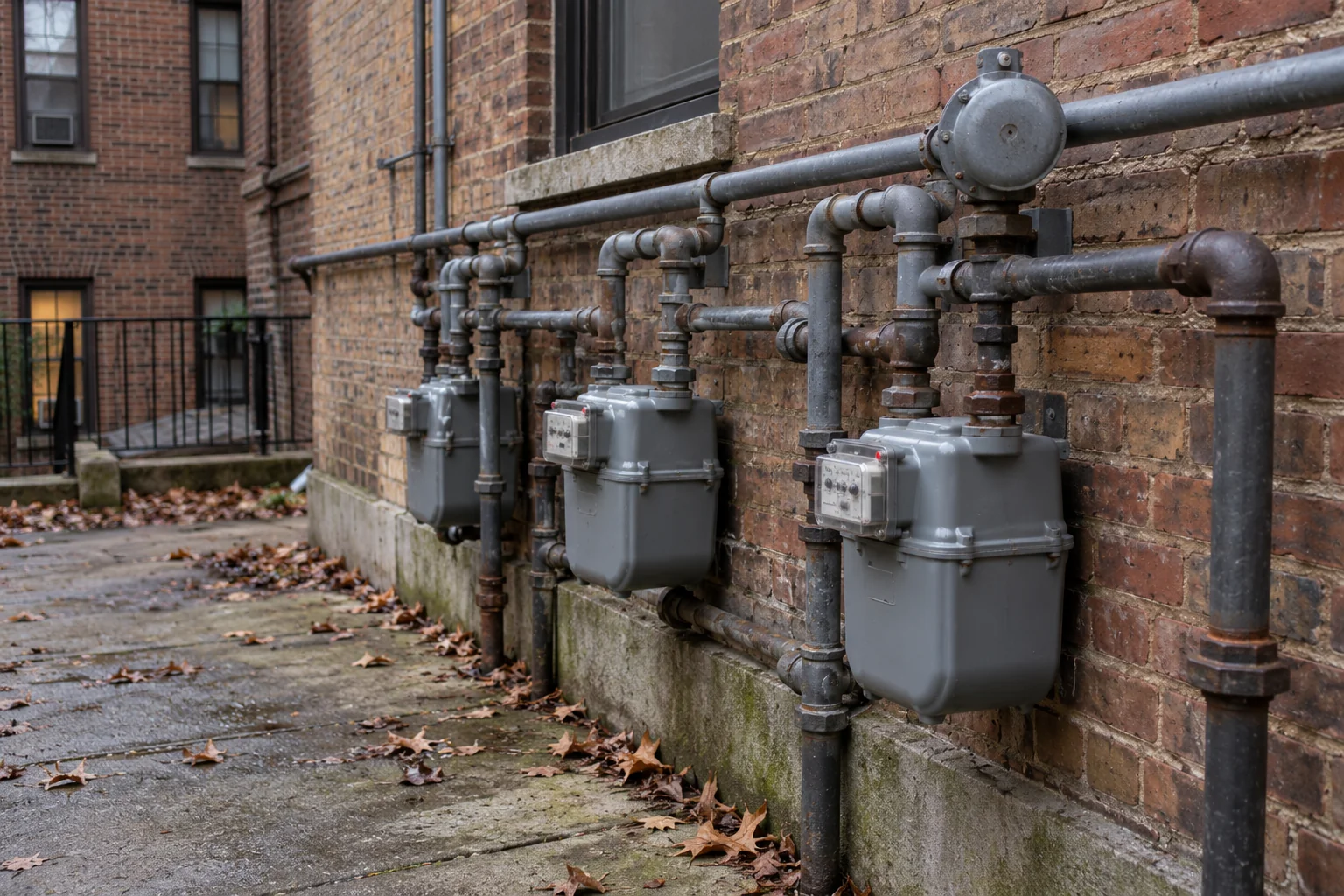
On this page9 sections
A clear place to start
Read This First if You're Short on Time
Applications for the state's heating assistance program, HEAP, open on November 2. A family of four with gross monthly income at or below $6,852 is within the income limit. Tenants whose heat is included in the rent may also qualify.
Con Ed and National Grid both offer discounts deducted directly from your bill each month. Receiving HEAP gets you enrolled automatically. Since January this year, households with income at or below the local median have also been able to apply themselves.
If you can't pay, don't avoid the problem. You can ask for installments. Between November 1 and April 15, utilities must take several extra steps before shutting off service related to heating.
Imagine Xiao Wu rents a one-bedroom in Queens.
(Xiao Wu is fictional, and the scenes below are hypothetical.)
In summer, her gas bill was a little over $60 a month. At the end of October, she opens the Con Ed app and sees $280 for this month. Her first thought is that it's a mistake. Her second: does that mean December and January will be $400 or $500?
She asks a neighbor in the building, who says their bill is only a little over $100.
What People Are Asking in the Comments
These past few days on Xiaohongshu, posts asking “Is $300 a month for gas normal?” have been filling up with comments. Someone says an inspection turned up several gas leaks. Someone else shares a simple trick: photograph the gas meter before bed and again in the morning, then compare the readings. Posts about “I can't understand my ConEd bill,” “monthly discounts on electricity and gas” and “expanded energy assistance” are also being shared a lot.
These are the posters' own accounts. Below, we'll go through the official guidance from the state, city and utilities, one thing at a time.
Check the Bill First: Did You Use More, or Was It Estimated?
If your bill suddenly jumps, first check whether this month's meter reading was an actual reading or an estimated one.
The state Department of Public Service (DPS) explains that when a utility can't get in to read the meter, it can issue an estimated bill. After four consecutive months of estimates, it must try to get an actual reading, for example by arranging a visit or asking you to read the meter yourself. If your actual usage is at least 50% above the estimate, or the difference is at least $100, you can pay the catch-up amount over at least three months.
To avoid estimates, you can submit your own reading. Con Ed's meter-reading page says you can send them your account number and a clear photo of the meter to avoid estimated bills.
That suggestion in the comments to take a photo before bed and another in the morning can be useful. If you haven't cooked or showered all night but the gas meter keeps moving, it's time to look beyond the bill. Con Ed is clear: if you smell gas, leave immediately and call 911 or 1-800-75-CONED.
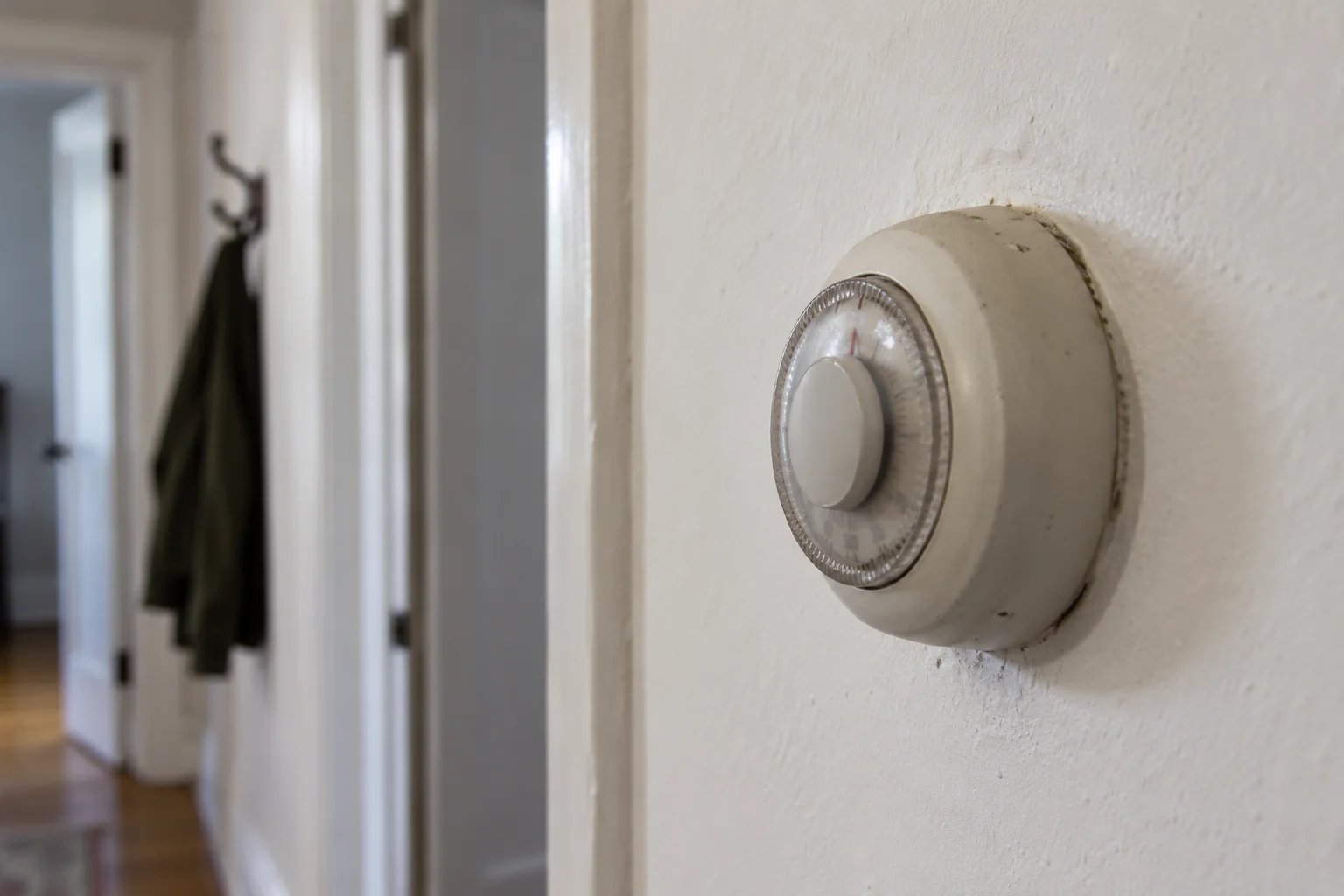
HEAP Heating Assistance: Applications Open November 2
HEAP, the Home Energy Assistance Program, is the state's heating assistance program. The governor's October 16 press release and the city Human Resources Administration (HRA) page both say applications for the 2026–2027 regular benefit open on November 2. The governor's press release and the state website also say Emergency HEAP opens on January 4, 2027.
The income limits use gross monthly income, under the 2026–2027 standards on the state website.
One person: $3,563
Two people: $4,659
Three people: $5,756
Four people: $6,852, or $82,230 a year
People already receiving SNAP, also known as food stamps, cash assistance or SSI also qualify. The governor's press release says most households that receive HEAP get it automatically because they already receive SNAP or cash assistance, without having to submit a separate application.
How much can you get? This year's base benefit for households heating with fuel oil is $990, up $90 from last year. An additional $35 is available if the household includes someone age 60 or older, a child under 6 or someone with a long-term disability. The state hasn't yet announced this year's amounts for gas and electric heating. For reference, last season the state website listed $45 or $50 for households whose heat was included in the rent, and $21 for households in government-subsidized housing with heat included. For households paying gas or electric heating costs directly, benefits started at $400.
One point needs to be clear. Eligibility includes an immigration-status requirement, but two official pages word it differently. The state website says household members must be U.S. citizens or “qualified non-citizens,” with a Social Security number provided for each person. The city HRA page says at least one household member must be a citizen or qualified non-citizen. If you're unsure how your household fits, call and ask before applying.
In New York City, you can apply in these ways, according to HRA.
Online: ACCESS HRA.
By phone: 718-557-1399. You can request an application by mail and ask about eligibility and documents.
By mail: Send application form LDSS 3421 to Home Energy Assistance Program/HEAP, P.O. Box 1401, Church Street Station, New York, NY 10008.
By fax: 917-639-2900.
In person: Visit a HEAP office or outreach location. The Queens location is on the second floor at 32-20 Northern Blvd, open Monday through Friday, 8:30 a.m. to 5 p.m., according to HRA's locations page.
The state website lists three types of documents to prepare: proof of address, such as a lease, rent receipt, utility bill or a letter from the landlord confirming that heat is included in the rent; recent pay stubs for everyone in the household; and identification for everyone in the household.
I'd like to apply for HEAP. My heat is included in my rent. What documents do I need to send?
I want to apply for HEAP heating assistance. My heat is included in the rent. Which documents do I need to mail?
Emergency assistance is for people whose service has already been shut off or is about to be. HRA lists these requirements: gas or electric heat is already off, or a shutoff date has been scheduled; for oil heat, the tank is less than one-quarter full. Your income must be within the limit, or you must receive SNAP, cash assistance or SSI while living alone. The bill must be in your name. Household resources such as savings must be below $2,500, or $3,750 if the household includes someone age 60 or older or a child under 6.
If you own and live in your home, are age 60 or older yourself, and meet HEAP's income and asset limits, the state also offers heating-equipment repair and replacement assistance: up to $4,000 for repairs and $8,000 for replacement. Applications opened on October 1, according to the state website.

A Discount Taken Straight Off Each Month: EAP
This is the “monthly electricity and gas discount” people mention on Xiaohongshu.
The DPS Energy Affordability Program (EAP) page says households receiving benefits such as HEAP, SNAP, Medicaid, SSI, cash assistance or public-housing assistance can get this discount. On January 13 this year, it expanded to households with income at or below the local median. For Con Ed and National Grid customers in New York City, the income limits are as follows.
One person: $113,400
Two people: $129,600
Three people: $145,800
Four people: $162,000
The discount varies a lot. Con Ed's discount schedule, effective February 1, 2026, lists $135.24 a month for gas heating at the lowest tier, and $189.83 a month for the tier receiving larger HEAP benefits. That's the “up to $190” you see online. If you apply based on income alone, the discount depends on your income. At or below 60% of the median, the gas-heating discount is also $135.24 a month. Between 60% and 80%, it's $44.50. Between 80% and 100%, it's just $1.
There are also two ways to enroll. Con Ed says people receiving HEAP or cash assistance are enrolled automatically after the government agency notifies it. People receiving Medicaid, SNAP or SSI need to apply themselves. You can email the application to EAP@conEd.com, and Con Ed has a Chinese application form. To apply based on income alone, go to conEd.NYEEAP.com or call 1-877-400-2501.
If your gas bill is from National Grid, its website says you will be enrolled automatically once the HEAP benefit is credited to your account. Gas-heating discounts range from $77.27 to $139.38 a month. You can call its Energy Affordability team at 1-718-403-2216 with questions.
So the order is straightforward. Apply for HEAP first. Once you receive it, the discount will usually follow automatically. If you receive SNAP or Medicaid, don't wait: apply for the discount yourself.
I receive SNAP. I'd like to enroll in the Energy Affordability Program. Can you add the discount to my account?
I'm receiving SNAP and want to join the Energy Affordability Program (EAP). Can you apply the discount to my account?
If You Really Can't Pay: Installments and Shutoff Protections
Here's the plain truth: an overdue balance won't disappear by itself. Avoiding calls only leaves you with fewer options.
New York State's Home Energy Fair Practices Act (HEFPA) provides a number of protections, as explained by DPS.
You can enter a deferred payment agreement. The down payment cannot exceed 15% of the amount owed or half your average monthly bill, whichever is higher. Monthly installments generally cannot exceed half the average monthly bill or 10% of the amount owed, again whichever is higher.
November 1 through April 15 is the cold-weather period. Before shutting off service related to heating, the utility must try to reach an adult in the household at least three days beforehand and again on the shutoff day. If a shutoff could threaten health or safety, it must notify social services and delay the shutoff for at least another 15 business days.
If a doctor or health department certifies a medical emergency, service must be maintained for 30 days, with renewals possible.
If all adults in the household are age 62 or older, blind or disabled, the utility must make special contact before a shutoff, notify social services and allow another 15 business days.
Shutoffs can happen only Monday through Thursday, between 8 a.m. and 4 p.m. Service cannot be shut off for nonpayment on holidays, the day before a holiday or during the two-week period around Christmas and New Year's Day.
A final shutoff notice cannot be mailed until at least 20 days after payment was due. After mailing it, the utility must allow another 15 days.
Con Ed also has its own rule: it does not shut off residential service when that day's forecast high in Central Park, including wind chill, is 32°F or below, according to its guidance.
If you want steadier monthly bills, you can apply for budget billing, which spreads a year's costs over 12 months. DPS points out that this doesn't reduce the annual total; it just avoids a sudden winter spike.
If you can't work things out with the utility, call the state DPS help line at 1-800-342-3377. If a shutoff is already pending, call its shutoff hotline at 1-800-342-3355, as listed on the DPS complaint page.
I can't pay the full balance right now. I'd like to set up a deferred payment agreement. What's the lowest down payment you can offer?
I can't afford the entire overdue balance right now and would like an installment agreement. What is the minimum down payment?
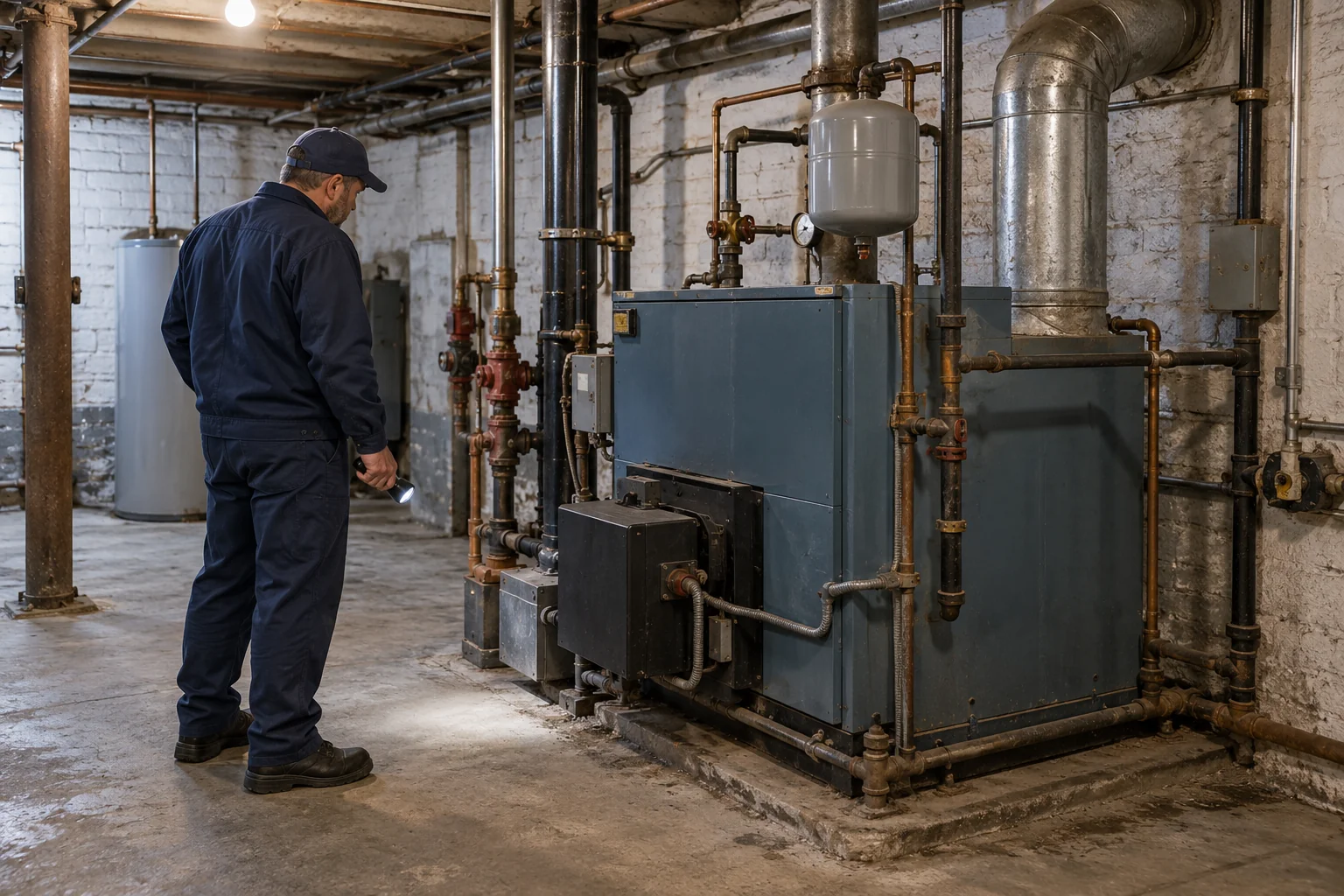
A Caller Says “Pay Within an Hour or We'll Shut Off Your Gas”? Hang Up First
Winter is also a peak time for scam calls impersonating utilities.
Con Ed's scam-prevention page is clear. It never accepts gift cards, cryptocurrencies such as bitcoin, wire transfers or transfers through services such as Venmo, Zelle and PayPal. Scammers threaten to “shut off your electricity or gas within an hour,” and caller ID can be spoofed. They also build fake websites that appear in search ads. Con Ed employees carry ID badges with a photo and employee number.
The Federal Trade Commission's (FTC) advice boils down to one thing: verify by calling the number on your paper bill or the official website, not a number the caller gives you.
Compare that with the rules above. A real shutoff comes after written notice and can happen only during daytime hours, Monday through Thursday. A caller demanding payment within an hour is already a warning sign.
I'll call Con Edison back at the number on my bill.
I'll use the number on my bill to contact Con Ed directly.
Two “Buts”
“But my heat is included in the rent and I don't have a gas bill. Does any of this apply to me?”
Yes. HEAP explicitly says households with heat included in the rent may also receive assistance, though the amount is smaller than for those paying gas-heating costs themselves. If the electricity bill is still in your own name, EAP discounts are worth checking too. If the apartment isn't warm enough, that's the landlord's responsibility. The article about heating in this series explains whom to contact.
“But the posts say anyone at or below the median income can get a discount. Why did I only get $1?”
Because there are tiers. For applications based on income alone, the closer your income is to the local median, the smaller the discount. The 80%–100% tier gets just $1 a month. The larger discounts go to households receiving benefits such as HEAP and those with income at or below 60% of the median. So if you're within HEAP's income limit, apply for HEAP first.
Before You Go
Winter bills still need paying, but there may be ways to pay less.
First check whether the bill is estimated. Apply for HEAP after November 2, ask for the monthly discount if you receive qualifying benefits, and request installments if you can't afford to pay. Each of these starts with a phone call or a form.
How much higher is your household's gas bill this year compared with last year? Feel free to share in the comments, including what you've done to bring it down.
Three things to do next
- Find the latest bill and check whether the reading is actual or estimated.
- Ask about HEAP and EAP eligibility and documents for your household.
- Contact the utility about installments; use the number on your bill to verify calls.
Verification Date and Sources
The pages below were checked on October 26, 2026, and rechecked on October 28. Xiao Wu and the scenes in this article are hypothetical. The situations in “the comments” come from public Xiaohongshu posts and are readers' accounts. This article provides general information and does not recommend any service. Benefit amounts, discounts and income limits may change; use the official figures in effect when you apply. At the time of checking, the state had not yet announced 2026–2027 HEAP amounts for gas and electric heating. This article uses the previous season's figures for reference.
View official sources
New York State: Governor's press release announcing that HEAP opens November 2 (October 16, 2026) (https://governor.ny.gov/news/governor-hochul-announces-15-million-new-yorkers-can-receive-hundreds-dollars-help-cover-home); Apply for HEAP heating assistance (https://www.ny.gov/services/apply-heating-assistance-heap); Heating Equipment Repair or Replacement (https://www.ny.gov/services/apply-heating-equipment-repair-or-replacement)
New York City Human Resources Administration (HRA): Energy Assistance (https://www.nyc.gov/site/hra/help/energy-assistance.page); HEAP locations (https://www.nyc.gov/site/hra/locations/home-energy-assistance-program.page)
New York State Department of Public Service (DPS): Energy Affordability Program (https://dps.ny.gov/energy-affordability-program); HEFPA consumer rights guide (https://dps.ny.gov/consumer-guide-your-rights-residential-gas-electric-or-steam-customer-under-hefpa); File a Complaint (https://dps.ny.gov/file-complaint)
Con Edison: Energy Affordability Program and discount schedule (https://www.coned.com/en/accounts-billing/payment-plans-assistance/energy-affordability-program); Chinese application form (https://www.coned.com/-/media/files/coned/documents/accountandbilling/payment-plans-assistance/energy-affordability-applications/eap-chinese.pdf); Meter reading (https://www.coned.com/en/accounts-billing/how-to-read-your-meter); Cold-weather protections (https://www.coned.com/en/accounts-billing/payment-plans-assistance/special-services/cold-heat-protections); Gas leaks (https://www.coned.com/en/safety/energy-safety/gas-safety/reported-gas-leaks); Scam prevention (https://www.coned.com/en/safety/energy-safety/beware-of-scammers)
National Grid: Energy Affordability Program (https://www.nationalgridus.com/NY-Home/Bill-Help/Energy-Affordability-Program)
Federal Trade Commission (FTC): Utility scam warning (https://consumer.ftc.gov/node/298365)
A useful next step?
JOIN THE CONVERSATIONReader notes
Checking sign-in…
Loading reader notes…